




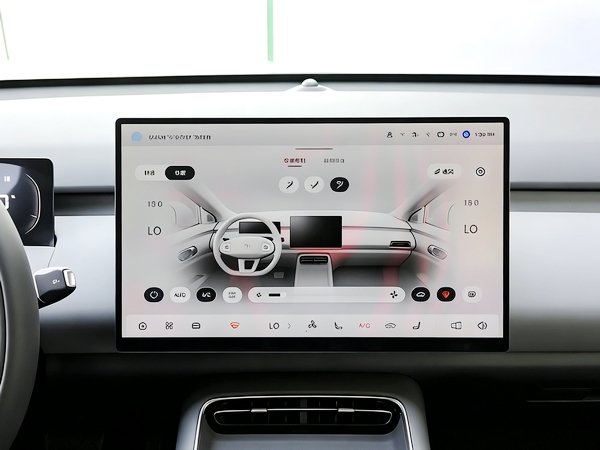
China’s Ministry of Industry and Information Technology has issued a mandatory draft standard requiring dedicated physical controls for 19 core driving functions—including turn signals, hazard lights, wipers, and gear selection—on all new vehicles produced from July 2027. The regulation marks a formal regulatory correction to the decade-long “all-touchscreen cockpit” trend.
The touchscreen-dominated design, pioneered by Tesla’s Model S in 2012, was widely adopted by domestic automakers as a symbol of intelligence. However, safety concerns have mounted. NHTSA data shows touchscreen operations divert driver visual attention for an average of 8 seconds, versus 0.5 seconds for physical buttons. Emergency response tests reveal hazard-light activation takes 4.7 seconds on screens compared to 1.2 seconds with physical controls, increasing collision risk by up to 80%.
Cost advantages had driven the shift—Ferrari’s CEO noted touch controls cost roughly 50% of mechanical buttons. But drawbacks including glare, moisture interference, glove incompatibility, and system crashes have exposed critical safety vulnerabilities. Real-world test data indicates touchscreen comprehensive error rates reach 27%, while physical buttons register only 0.8%.
Major automakers including BYD, Geely, Volkswagen, and BMW have already begun reintroducing physical controls in new models. The policy reflects a broader 2026 regulatory push targeting battery safety, ADAS signage, and cockpit ergonomics, signaling the industry’s transition from rapid expansion to quality-driven, safety-first development.




Global Travel
Oasis Drive Limited

+86-21-6109-6366

+86-21-6109-6366

+86-136-6162-6401
+86-158-0095-4269


Suite 5506, Shanghai Tower, No. 501 Yincheng Middle Road, Pudong New Area, Shanghai 200120, China